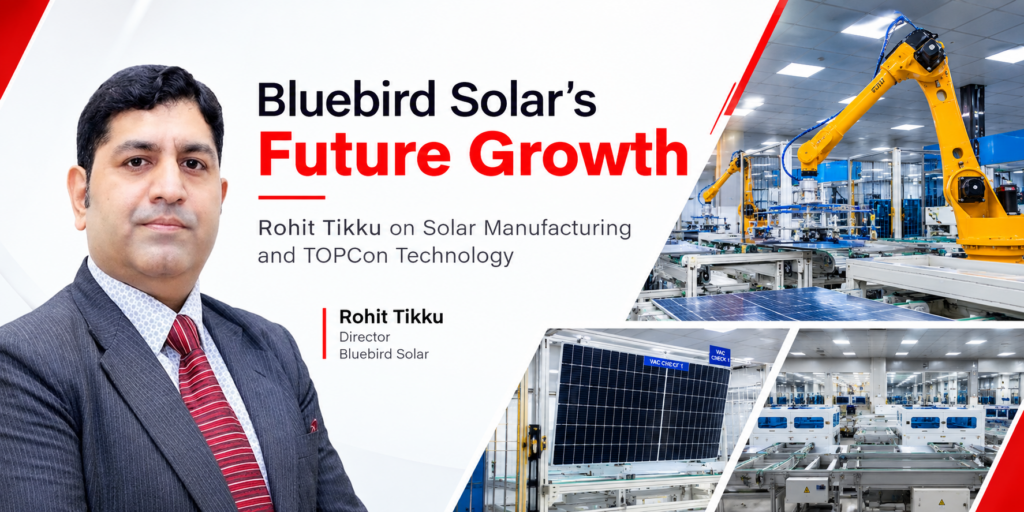
At REI Expo 2026, Bluebird Solar opened its 2.5 GW solar PV module manufacturing facility to visitors. CEO Rohit Tikku discusses the factory tour, TOPCon technology, domestic manufacturing plans, industry challenges and the company's next phase of growth.
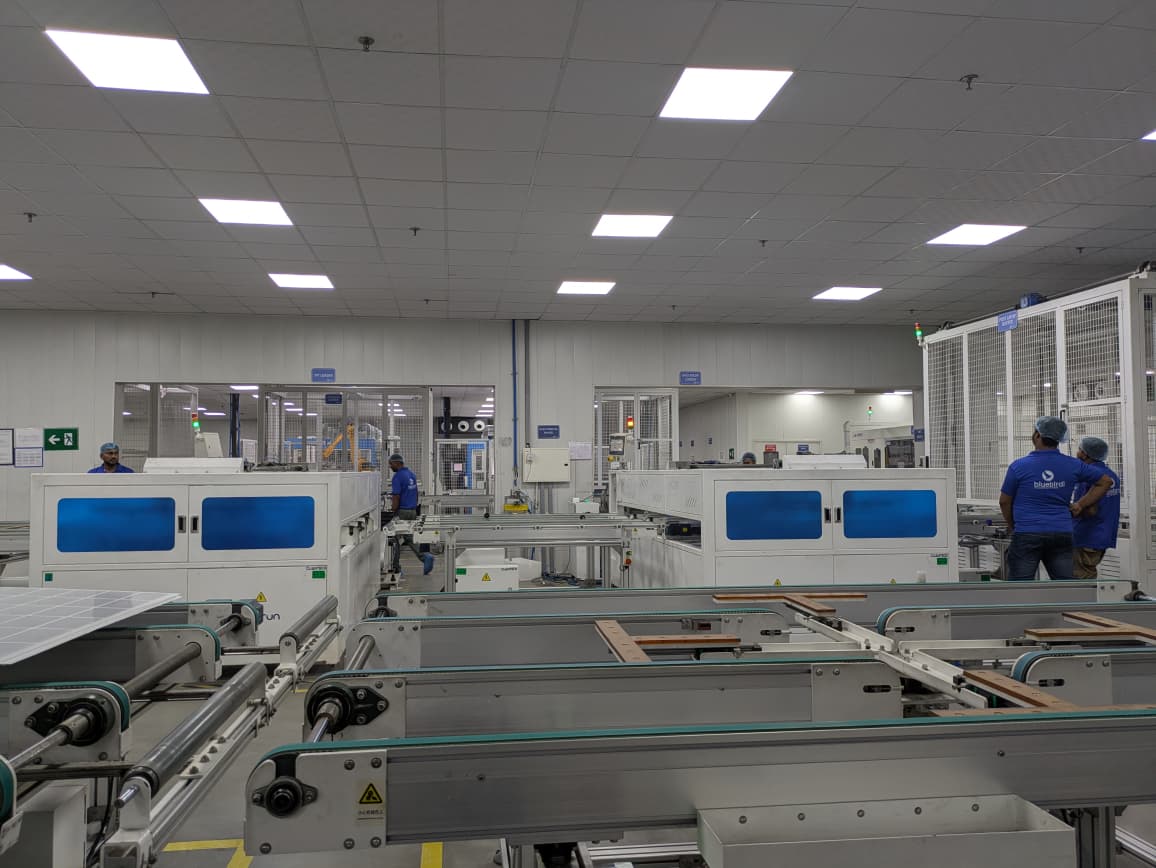
India's solar industry is growing rapidly, but the next stage of growth will require more than increasing module production capacity. Manufacturers will need to focus on technology, product quality, domestic manufacturing and a stronger supply chain. For Bluebird Solar, this shift is already shaping its future plans.
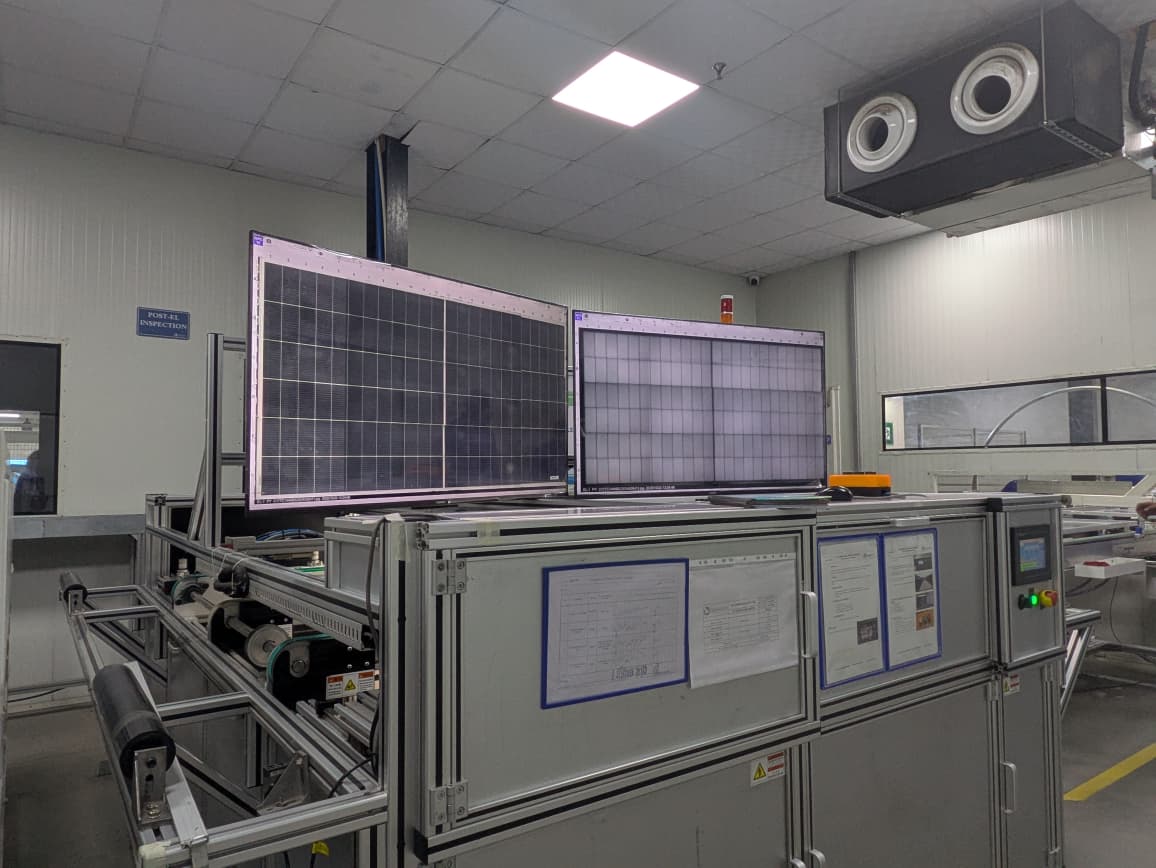
During REI Expo 2026, the company organised a factory tour for exhibition visitors, giving them an opportunity to see its manufacturing operations first-hand. The visit also offered a closer look at its range of TOPCon solar PV modules, with capacities of up to 650 Wp.
In an interview, Rohit Tikku discussed why the company organised the initiative, what makes a high-quality solar module, and why backward integration could become one of the most important developments in India's solar manufacturing journey. Learn more about Bluebird Solar and its solar solutions.
Taking REI Expo Beyond the Exhibition Floor
For Bluebird Solar, the idea was simple: give visitors an opportunity to see solar manufacturing up close rather than limiting their experience to exhibition stalls. REI brings together manufacturers, EPC companies, distributors, installers, technology providers and other professionals from across the solar industry. While exhibitions are useful for exploring products and building business relationships, a factory visit offers a different kind of experience. It allows visitors to see the technology and processes behind the products.
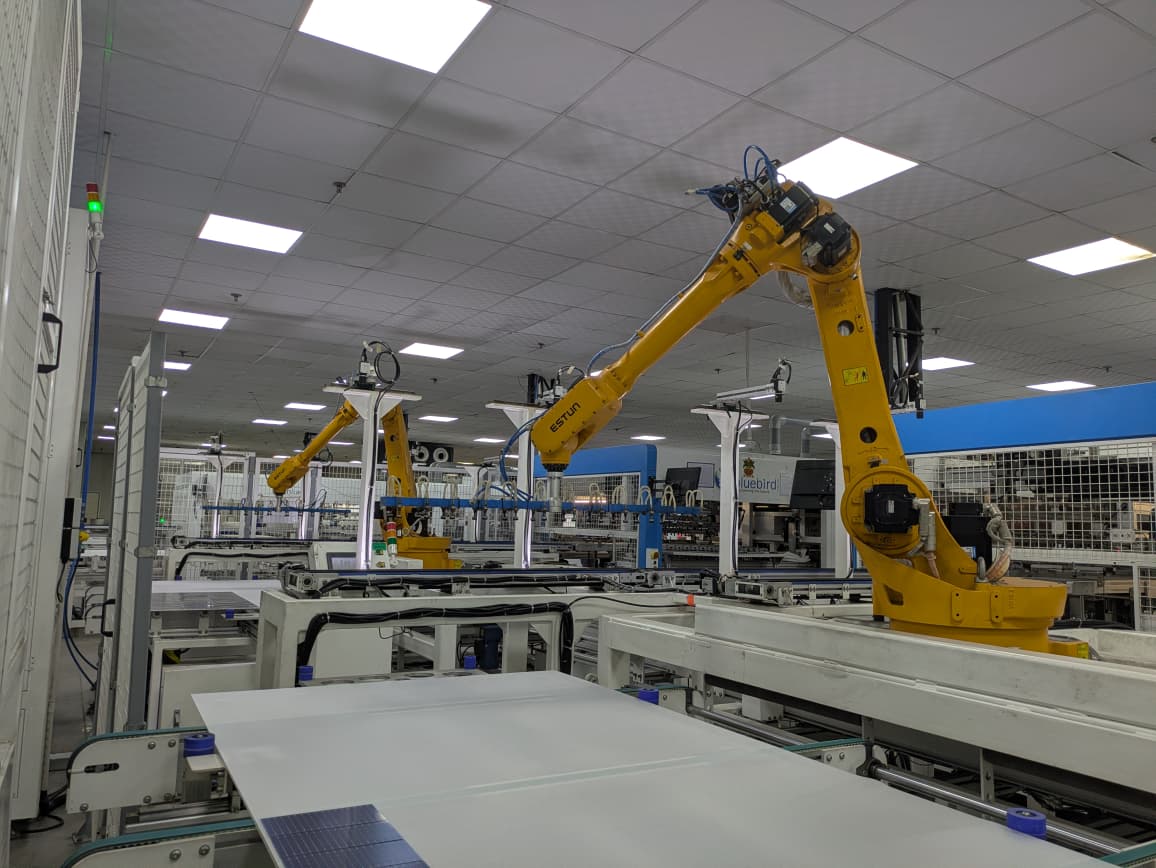
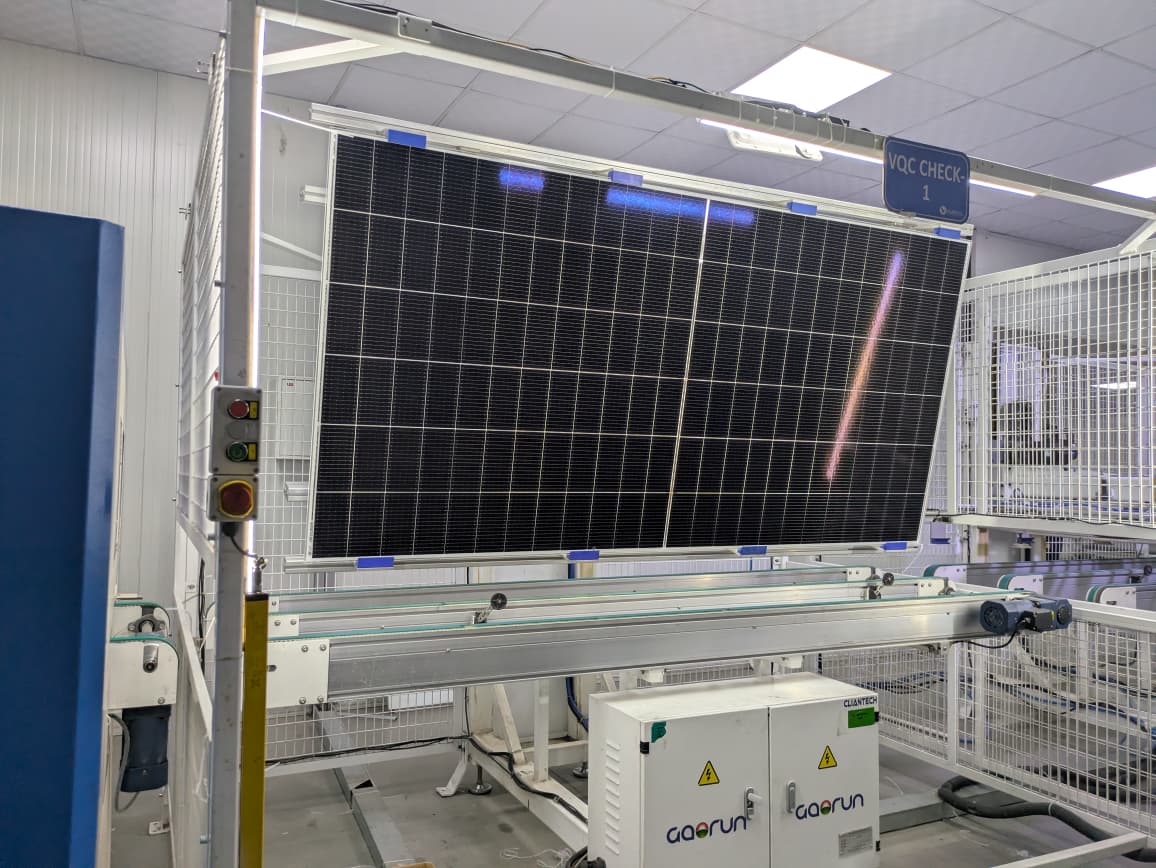
Through the initiative, Bluebird Solar offered REI visitors free and easy access to its stated 2.5 GW solar PV module manufacturing facility. Visitors could explore the company's manufacturing capabilities and its range of TOPCon PV modules, with capacities of up to 650 Wp.
The factory tour also created an opportunity for customers and industry professionals to connect with the manufacturing side of the business. For installers, EPCs and distributors, understanding a product beyond its specifications can help them make more informed decisions when selecting modules for projects.
The tour was more than a visit to a production facility. It was an opportunity to encourage direct interaction, build understanding and bring the industry closer to the technology powering India's solar growth.
What Separates a High-Quality Solar Module from an Average One?
As solar installations grow, choosing the right module becomes increasingly important. While price remains a major consideration for many buyers, the purchase price alone does not tell the full story of a solar module's value.
A high-quality module must deliver dependable performance over its operating life. This begins with the quality of its components, manufacturing processes and quality-control systems. Cell quality, encapsulation, glass, frame strength, junction boxes, electrical connections and production consistency all contribute to the finished product.
Performance under real-world conditions is equally important. Solar modules operate outdoors for years, facing heat, dust, humidity and changing weather conditions. Buyers should look beyond wattage and consider efficiency, degradation characteristics, temperature performance, mechanical strength, certifications, traceability, warranty terms and after-sales support.
For commercial and utility-scale projects, these factors can influence long-term generation, maintenance requirements and overall project economics. Product quality is therefore an important part of making a sound investment.
TOPCon Technology and the Next Phase of Solar Growth
TOPCon technology is emerging as an important part of the next phase of solar manufacturing in India. As manufacturers respond to demand for higher-efficiency modules and better use of available installation space, the industry is increasingly moving towards advanced cell technologies.
TOPCon stands for Tunnel Oxide Passivated Contact. It is a solar cell technology designed to improve efficiency by reducing electrical losses within the cell. Higher module efficiency can be useful where installation space is limited or where a project aims to maximise capacity within a defined area. Actual results depend on module design, installation conditions and project requirements.
According to Rohit Tikku, TOPCon cell manufacturing is attracting strong demand, and manufacturers are adopting the technology to remain competitive. This shift requires investment in suitable production lines, technical capabilities and consistent quality control.
Bluebird Solar's range of TOPCon modules, extending up to 650 Wp according to the interview details, reflects the shift towards advanced module options. The ability to combine technology adoption with manufacturing quality and competitive costs will remain important for long-term success.
The Next Big Step: Domestic Cell, Ingot and Wafer Manufacturing
One of the key points from the interview is Bluebird Solar's plan to expand beyond module manufacturing. Rohit Tikku said the company plans to enter TOPCon cell, ingot and wafer manufacturing by the next financial year. If implemented as planned, this would mark a step towards a more integrated solar manufacturing model.
Solar cells convert sunlight into electricity, while wafers and ingots are upstream materials used in cell production. Developing domestic capabilities across these stages can help strengthen India's manufacturing ecosystem, reduce dependence on imported components, improve supply-chain coordination and build technical expertise within the country.
Backward integration also requires significant investment, advanced manufacturing capabilities, skilled teams, dependable raw-material access and careful planning. Its success will depend on execution, market demand, cost competitiveness and the ability to operate at scale.
For Bluebird Solar, the proposed move signals an ambition to participate in more stages of the solar value chain rather than focusing only on finished modules. For India, strengthening domestic manufacturing across the supply chain can be an important step towards a more resilient solar industry.
Overcapacity: A Major Challenge for Solar Manufacturers
Rapid expansion in manufacturing capacity can become a challenge when production grows faster than actual demand. Rohit Tikku highlighted the growing supply-demand gap as a major issue for manufacturers. According to his assessment, manufacturing capacity has expanded to around four to five times the actual requirement, creating an imbalance in the market.
Such an imbalance can put pressure on module prices, capacity utilisation, margins and financial performance. When many companies compete for the same customers, price can become a major factor in purchasing decisions, making it harder for manufacturers to recover their investments.
The challenge is not simply to produce more modules. It is to build capacity that is commercially sustainable and aligned with genuine market demand. Manufacturers must focus on product differentiation, technology upgrades, operational efficiency, quality and dependable customer relationships.
The situation highlights an important lesson for the sector: capacity expansion needs to go hand in hand with market understanding and sound business planning.
Bluebird Solar's Next Milestone: BESS and Cell Manufacturing
Bluebird Solar's next phase of growth is expected to extend beyond conventional solar module manufacturing. Rohit Tikku indicated that the company plans to enter battery energy storage systems (BESS) and cell manufacturing by next year.
Energy storage is becoming increasingly important across the renewable energy sector. Solar generation varies with sunlight, while electricity demand continues throughout the day and night. Battery storage can store surplus electricity and make it available when required, depending on the system design and application.
Entering BESS could allow Bluebird Solar to explore opportunities beyond module supply and participate in a broader range of renewable energy solutions. Cell manufacturing would support its plans to move further upstream in the solar value chain.
Together, these proposed initiatives point towards a wider business vision: building capabilities across different parts of the renewable energy ecosystem. The next challenge will be to translate these plans into successful projects and establish a competitive position in markets that demand quality and cost efficiency.
A Message to the Next Generation of Solar Entrepreneurs
Rohit Tikku's message to aspiring solar entrepreneurs is to look beyond module manufacturing and explore opportunities across the wider solar supply chain. As more companies enter module manufacturing, competition is likely to remain intense. He sees opportunities in cells, ingots and wafers, as well as in supporting industries.
These supporting industries include solar glass, aluminium frames, ribbons, junction boxes and other components required for module manufacturing. Each plays a role in the production process, and growing demand for solar equipment can create opportunities for specialised suppliers.
Entrepreneurs can also explore storage solutions, specialised engineering, testing, equipment, and operations and maintenance services that support the renewable energy value chain.
Each opportunity requires a clear understanding of market demand, technical requirements, investment needs and competition. Long-term success will depend on building capabilities and solving genuine industry problems, not simply adding production capacity.
Looking Ahead: From Module Manufacturing to a Wider Energy Ecosystem
Bluebird Solar's plans reflect wider changes taking place across India's solar industry. TOPCon technology is gaining importance, manufacturers are exploring deeper domestic integration, and energy storage is becoming a growing part of renewable energy discussions. At the same time, the industry faces challenges such as excess manufacturing capacity, price pressure and the need to align investment with market demand.
The company's proposed expansion into TOPCon cell, ingot and wafer manufacturing, alongside its planned entry into BESS, signals its intention to participate in more parts of the energy value chain. The success of this next phase will depend on execution and the company's ability to respond to changing market needs.
The factory tour during REI Expo 2026 offered visitors a closer look at Bluebird Solar's manufacturing capabilities. Its future plans point towards a broader ambition: to grow with an industry moving from rapid capacity addition towards greater technological depth, supply-chain strength and long-term sustainability.
For India's solar sector, the next chapter will not be defined by how many modules the country can produce alone. It will also depend on how much of the value chain it can build, how competitively it can manufacture and how effectively it can deliver reliable clean-energy solutions.
Leadership Perspectives
“India's solar opportunity is much bigger than the growth in installed capacity. Our focus must be on building quality, trust and a strong domestic manufacturing ecosystem. The companies that invest in technology and deliver dependable products will help create lasting value for the industry.”
Akshay Mittal — Director, Bluebird Solar
“The future of solar manufacturing lies in looking beyond modules. Cells, wafers, ingots and supporting components offer important opportunities for Indian entrepreneurs. We need to build capabilities across the value chain and create businesses that can compete on quality, technology and cost.”
Abhay Mittal — Director, Bluebird Solar
About Bluebird Solar
Bluebird Solar is an Indian solar solutions company focused on solar PV module manufacturing. The company has described its manufacturing facility as having 2.5 GW capacity and offers a range of TOPCon modules. Its proposed plans include expanding into cell manufacturing and battery energy storage systems.
Visit www.bluebirdsolar.com to learn more about the company.